Bella Blue's Original Nite Cap
Home of Bella Blue
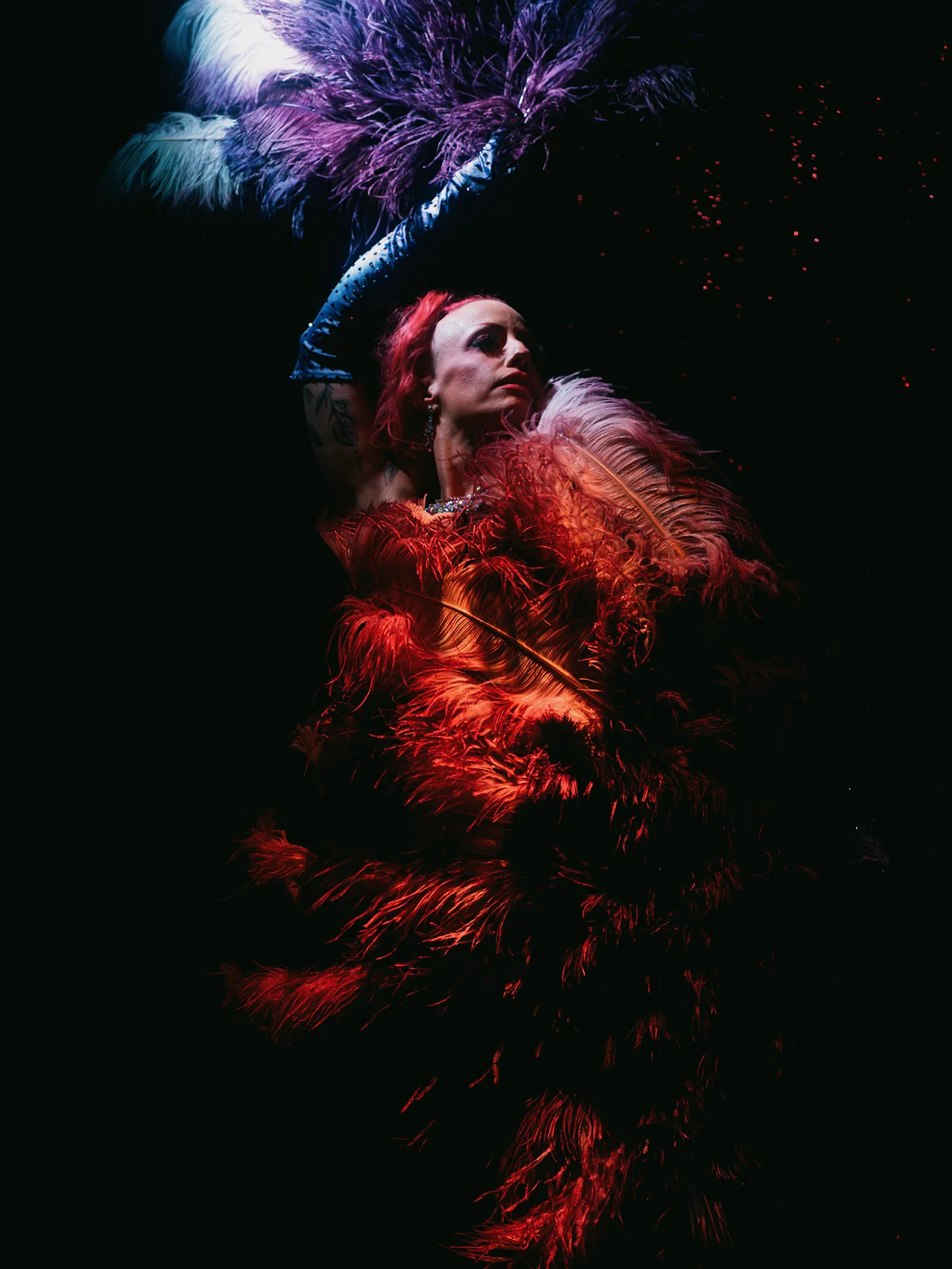
Bella Blue
@bellablueforeverHome of Bella Blue
Live Music, Burlesque & Cocktails in the 7th Ward
This Week
Doors at 5pm · 21 and up after 11pm · All bodies, all identities welcome
 Free
 Free
 Free


 FreeFreeFree
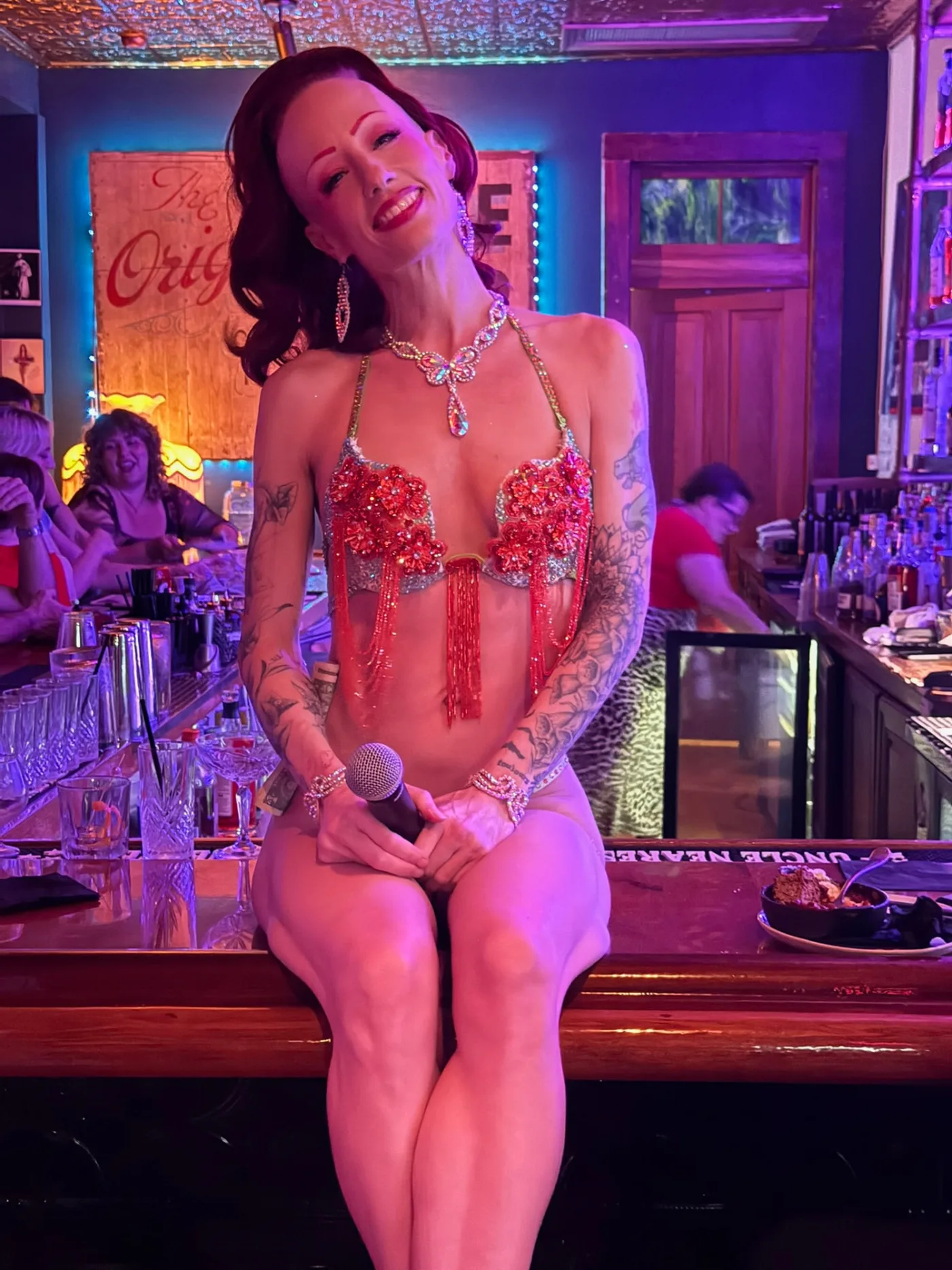
Owner · Headmistress
Owner · Headmistress of Hospitality
“New Orleans neo-burlesque royalty.” — Thrillist
“I never thought I'd necessarily be good at it — much less make a career out of it!”
Bella Blue was born and raised in New Orleans and trained in ballet and modern dance from childhood. As a teenager she snuck into burlesque shows at the Rollaway Lounge, mostly because she envied how brave the performers were. She took the stage herself in 2007, founded the New Orleans School of Burlesque in 2008, and still leads it as Headmistress. She has performed and produced for the Burlesque Hall of Fame Weekender and spent years ranked in the 21st Century Burlesque Top 50.
Known for acts that range from glamorous fan dances to wildly inventive, genre-bending spectacle, Bella brings the same warmth, imagination, and unapologetic spirit to The Original Nite Cap, where she is not just an owner, but a curator of unforgettable nights, bold artistry, and genuine New Orleans hospitality.
Profiled in Up All Night NOLA and Big Easy Magazine.
See Her StageShows She Created
Intimate
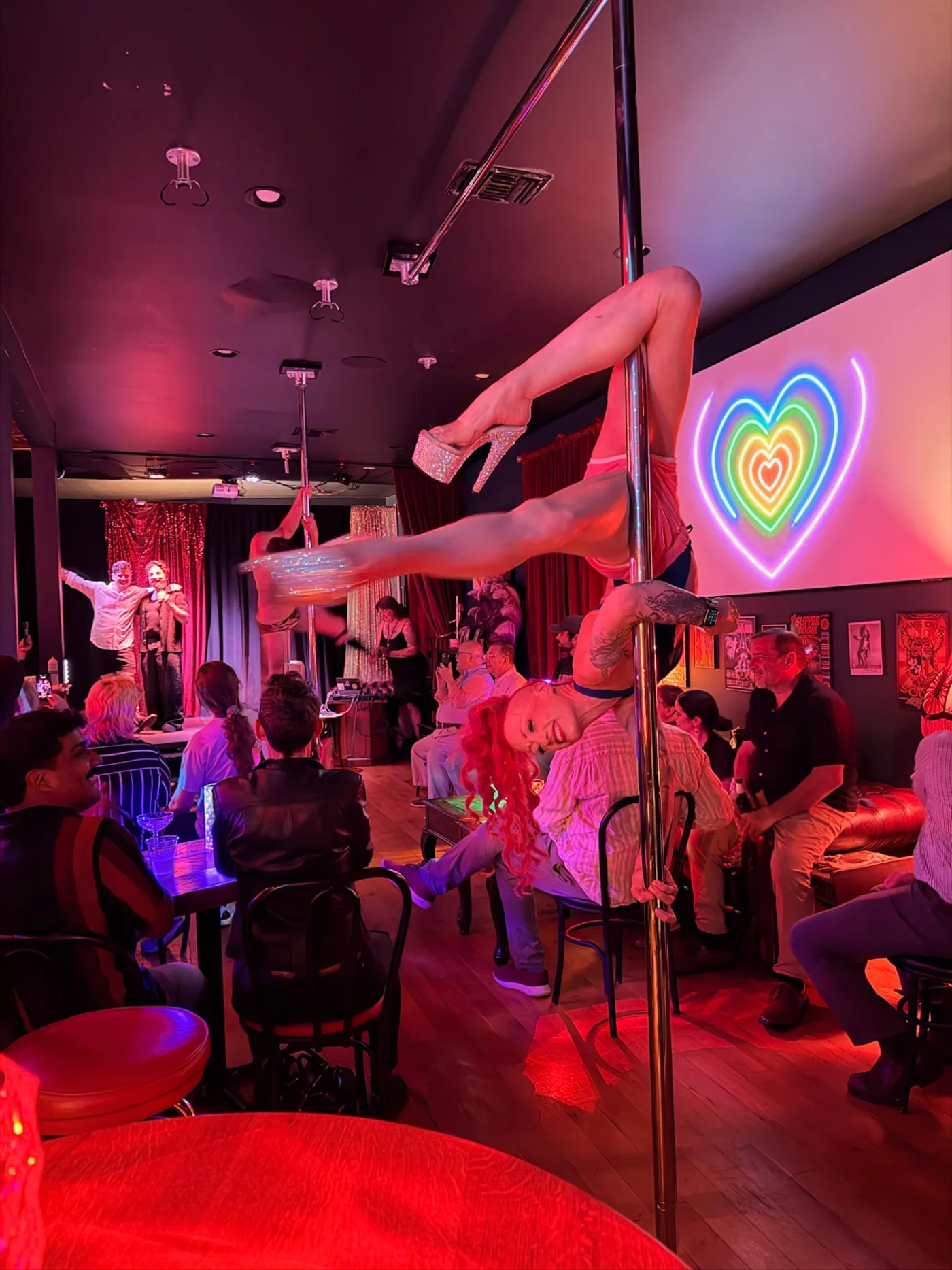
Intimate
Step upstairs into one of New Orleans' oldest speakeasies, where warm candlelight and velvet shadows set the mood. The Nite Cap has been pouring drinks at this corner since 1967. Now the room glows red and gold, the cocktails are strong, and the show starts close enough to touch.
Est. 1960s · Reborn 2024
The Original Nite Cap hails from the 1960s, spearheaded by the legendary Big Chief Alfred Doucette and his brothers on a mission to build one of the best nightclubs in New Orleans. Originally Uptown on Louisiana Ave., The Nite Cap closed in the '80s.
Fast forward to 2018: renovating 1300 St. Bernard Ave., the building's owners found the original signage — and the revival began. By Summer 2024, Bella Blue, Andrew Principe, and JD Solomon brought the OGNC back to life. Under Bella's direction, it's become a neighborhood staple and 7th Ward showbar — a variety of entertainment nearly every night, or just a chill place for a cocktail with friends. Come see what we're all about!
1960s
Big Chief Alfred Doucette and his brothers set out to build one of the best nightclubs in New Orleans.
1980s
After decades Uptown, The Nite Cap pours its final drink and the name goes quiet.
2018
Renovating 1300 St. Bernard Ave., the building's owners uncover the original signage — and the revival begins.
2024
Bella Blue, Andrew Principe, and JD Solomon bring the OGNC back to life in the 7th Ward.
Links to the Past
Burlesque on Bourbon Street hit its heyday from the 1920s through the early 1960s, when the French Quarter was one of America's most theatrical entertainment districts — a dense corridor of nightclubs and cabarets where jazz, comedy, striptease, and variety acts blended into a distinctly New Orleans form of nightlife.
The crowd was as eclectic as the acts: traveling businessmen, riverboat crews with cash in their pockets, politicians who wanted to see and be seen, and tourists chasing the city's reputation for vice and spectacle. Locals — service industry workers, musicians, neighborhood regulars — were part of the scene too, and women came as well, especially as burlesque leaned toward glamorous revue. Couples on dates and curious first-timers all filtered through the same doors.
The venues ranged from small, smoky rooms to elaborate theaters with stages, orchestras, and full production numbers. Clubs like the 500 Club ran comedians, emcees, jazz bands, and dancers in a continuous flow. Burlesque here wasn't just striptease — it was a structured show: a comic monologue, a musical interlude, then a featured dancer balancing tease, choreography, and personality.
Many clubs ran on a cabaret model — drinks expected, light food encouraged. Menus leaned toward what could be eaten without interrupting the show: sandwiches, oysters, shrimp cocktails, simple Creole dishes. Outside, late-night eateries, po'boy shops, and oyster bars kept crowds fed between shows. Bourbon Street worked as a continuous loop of consumption and spectacle, with food as both fuel and social glue.
By the 1950s the style turned polished and cinematic — feathered costumes, choreographed ensembles, marquee headliners — while regulation and changing norms slowly eroded the scene. By the early 1960s the classic era was fading. What remains is the template: a street where performance, indulgence, and hospitality coexist, and a night out is never just one thing — a drink, a bite, a show, and a story.
Happy to be your Speakeasy, New Orleans.
Get TicketsYes. The full Cabaret Menu is served upstairs every night, from the meatball and steak frites to pasta, sweets, and cocktails. For a sit-down dinner before the show, Pulcinella is right downstairs.
Pulcinella Downstairs