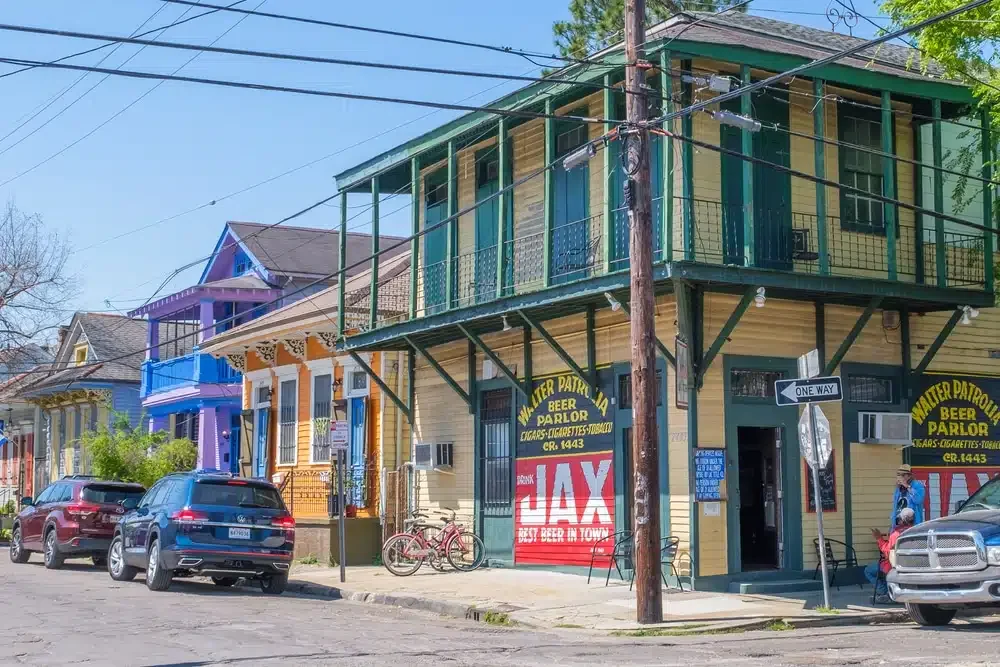
The Bywater neighborhood sits downriver from the French Quarter and Marigny, forming part of New Orleans’ historic crescent along the Mississippi. Its roots stretch back to the 19th century, when it developed as a working-class district tied closely to the river, the port, and the rail lines. Originally called Faubourg Washington and later Upper Ninth Ward, the area attracted a diverse population—French Creoles, free people of color, Caribbean immigrants, Germans, and Irish—who lived in rows of modest cottages and shotguns built between industrial corridors and the riverfront. The name “Bywater” emerged in the 1940s, reflecting its geography between railroad tracks, canal lines, and the river itself.
Bywater’s early identity was shaped by its multicultural working-class residents, who maintained strong community ties through churches, corner stores, neighborhood bars, and mutual-aid societies. Its architecture—vibrant Creole cottages, double shotguns, camelbacks, and corner commercial buildings—preserved a sense of historic continuity even as economic shifts changed the urban landscape around it. The proximity to river industries meant many residents worked in maritime trades, bakeries, breweries, shipyards, and warehouses, contributing to the commercial backbone of New Orleans throughout the early 20th century.
Beginning in the late 20th century, especially after the 1980s, Bywater became a magnet for artists, musicians, and bohemians, drawn by its affordability, architectural charm, and creative energy. This wave brought new galleries, studios, informal music spaces, and community gardens. After Hurricane Katrina, the neighborhood saw even more rapid change as newcomers arrived and investment increased. While this revitalization brought new restaurants, coffee shops, and cultural venues, it also raised concerns around displacement and gentrification—a tension that continues to shape conversations about Bywater’s future.
Culturally, the Bywater is known for its avant-garde spirit and neighborhood-driven creativity. It hosts quirky parades, experimental performance spaces, local art markets, and a vibrant bar and café scene that blends long-time institutions with newer arrivals. The neighborhood also plays a role in New Orleans’ LGBTQ+ history and community networks, offering inclusive spaces and a strong sense of artistic freedom. Its colorful houses, murals, and street installations reflect a neighborhood that thrives on expression and reinvention.
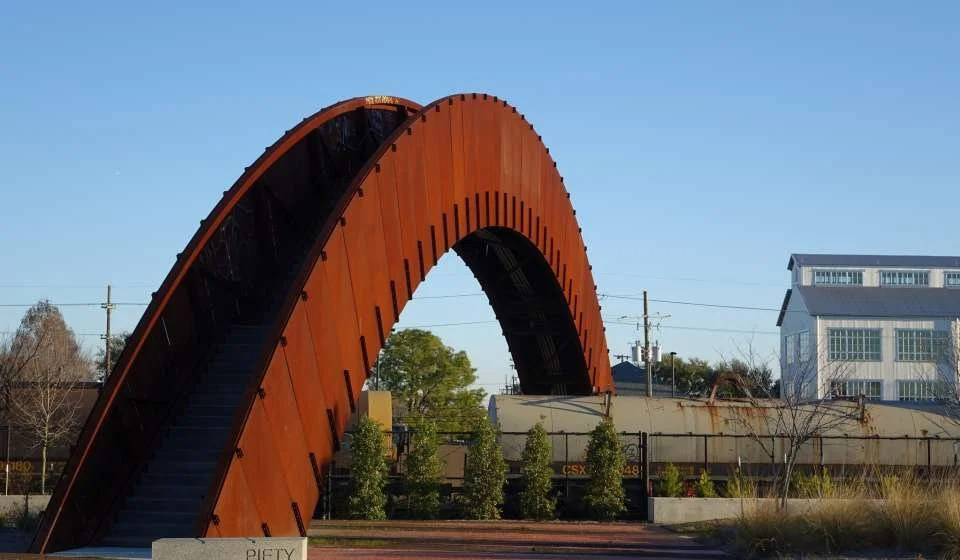
Today, the Bywater remains one of the most distinctive neighborhoods in New Orleans—equal parts historic and contemporary, rooted and evolving. Its riverfront Crescent Park, converted from industrial land into a sweeping public green space, symbolizes this transformation: honoring the neighborhood’s past while opening the landscape to new possibilities. With its blend of Creole history, working-class heritage, artistic energy, and community activism, the Bywater continues to shape—and be shaped by—the cultural pulse of New Orleans.