Commedia dell’Arte
Pulcinella!
The Cunning Schemer
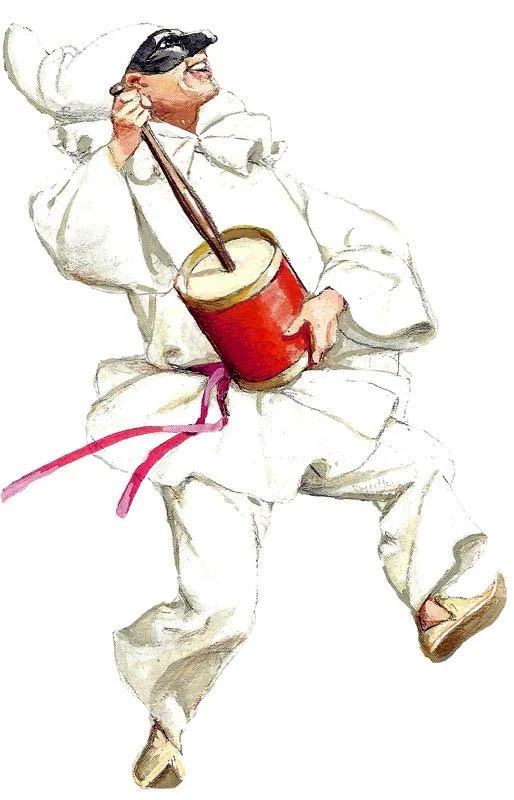
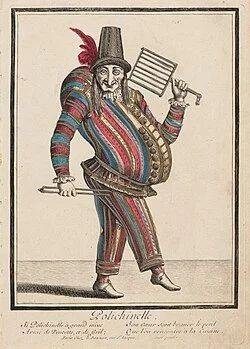
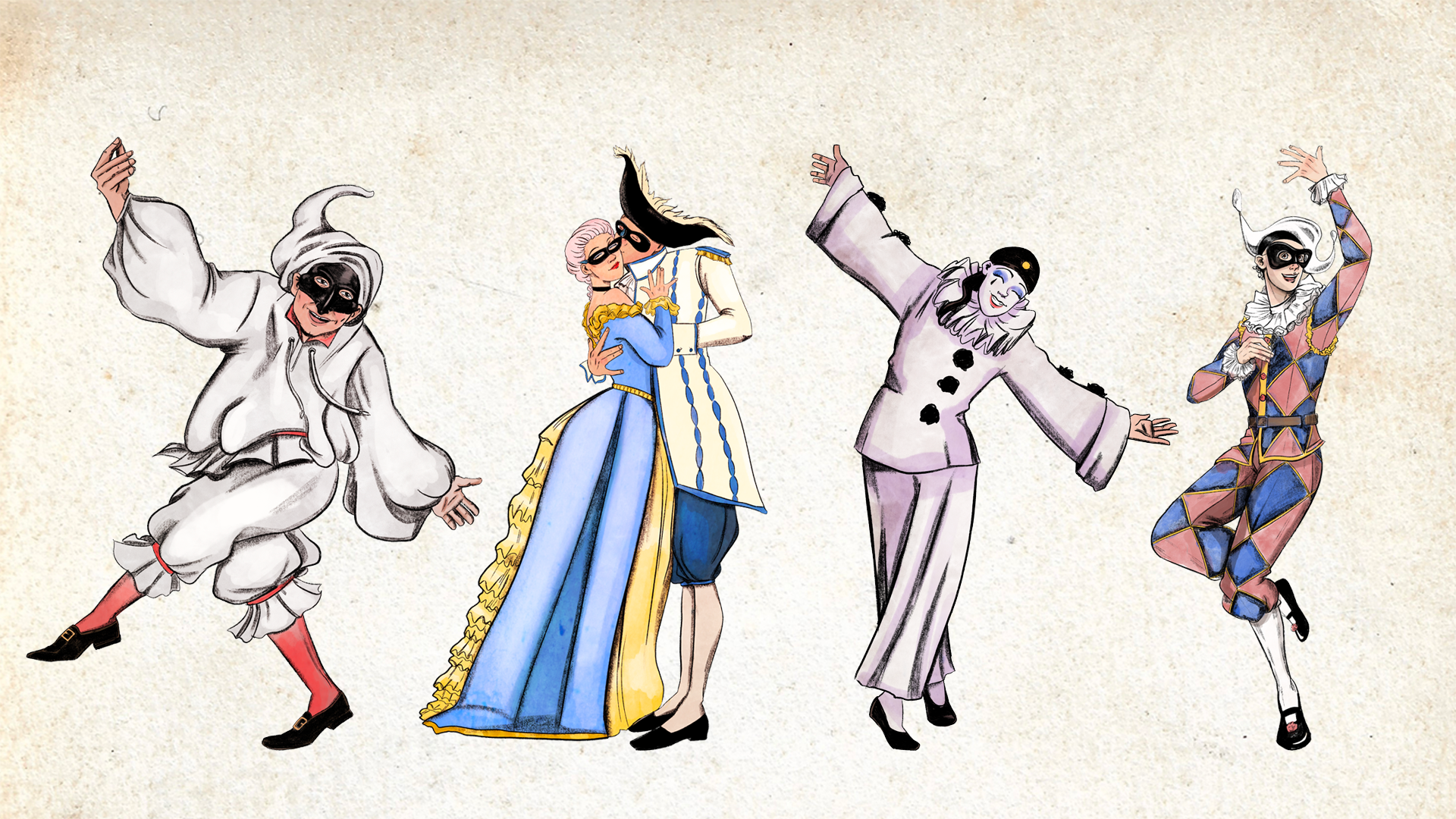
Pulcinella is one of the most enduring and recognizable characters of Commedia dell’Arte, originating in Naples and later spreading across Italy and Europe. Typically depicted with a hooked nose, hunchback, potbelly, and a raspy voice, he embodies contradictions: he can be clever or foolish, timid or bold, victim or trickster. This duality gives him enormous flexibility within Commedia scenarios, allowing him to serve as a servant, a master, or something in between. His mask—often black and bird-like—captures his sly, slightly grotesque nature.
As a character, Pulcinella represents the common man struggling against authority, hunger, poverty, and misfortune. Often beaten, tricked, or overworked, he nevertheless manages to survive through cunning, sarcasm, and sheer resilience. His humor is rooted in physical absurdity and verbal irony, making him both sympathetic and hilarious. In many ways, Pulcinella became the emotional core of Neapolitan-style Commedia, reflecting the hardships and humor of everyday life.
Pulcinella’s physicality is a key element of his performance. His slouched posture, jerky movements, and elastic gestures make him instantly recognizable on stage. Performers traditionally use a high-pitched or croaking voice to emphasize his odd, puppet-like qualities. This strange mixture of limpness and sudden agility makes Pulcinella perfect for slapstick routines, pratfalls, and exaggerated reactions—hallmarks of Commedia’s visual comedy.
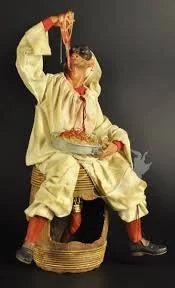
Pulcinella belongs to the zanni, the servant class of Commedia characters—the comic underdogs who drive chaotic plots, misunderstand instructions, and generate laughter through both wit and clumsiness. Among the zanni traditions is the famous spaghetti-eating bit, a staple of comedic stage business well into modern clowning. In this routine, a hungry servant (sometimes Pulcinella, sometimes another zanni like Arlecchino) devours long strands of pasta with exaggerated desperation, slurping, twirling, tangling, and often making a colossal mess. This gag highlights the zanni’s constant hunger and their inventive, frantic attempts to satisfy it.
Because the zanni are defined by appetite—literal and figurative—the spaghetti-eating routine became a visual shorthand for their poverty, resourcefulness, and chaotic charm. In Pulcinella’s hands, this comic bit becomes both slapstick and social commentary: the servant’s struggle with an absurdly long plate of noodles mirrors his larger struggle with a world that refuses to feed him properly. Over time, this kind of food-based physical comedy traveled into vaudeville, silent film, and clowning traditions, making Pulcinella not only a central Commedia figure but also an ancestor of modern visual humor.