Commedia dell’Arte
Commedia Dell’Arte and it’s path to american burlesque
Commedia dell’Arte emerged in Italy during the mid-16th century as one of the earliest forms of professional theater in Europe. Characterized by masked stock characters, semi-improvised dialogue, and lively physical comedy, it quickly spread throughout the continent. Its performances relied less on written scripts and more on scenario outlines, allowing actors to adapt quickly to different audiences and locations. This combination of structure and spontaneity made Commedia both accessible and immensely popular.
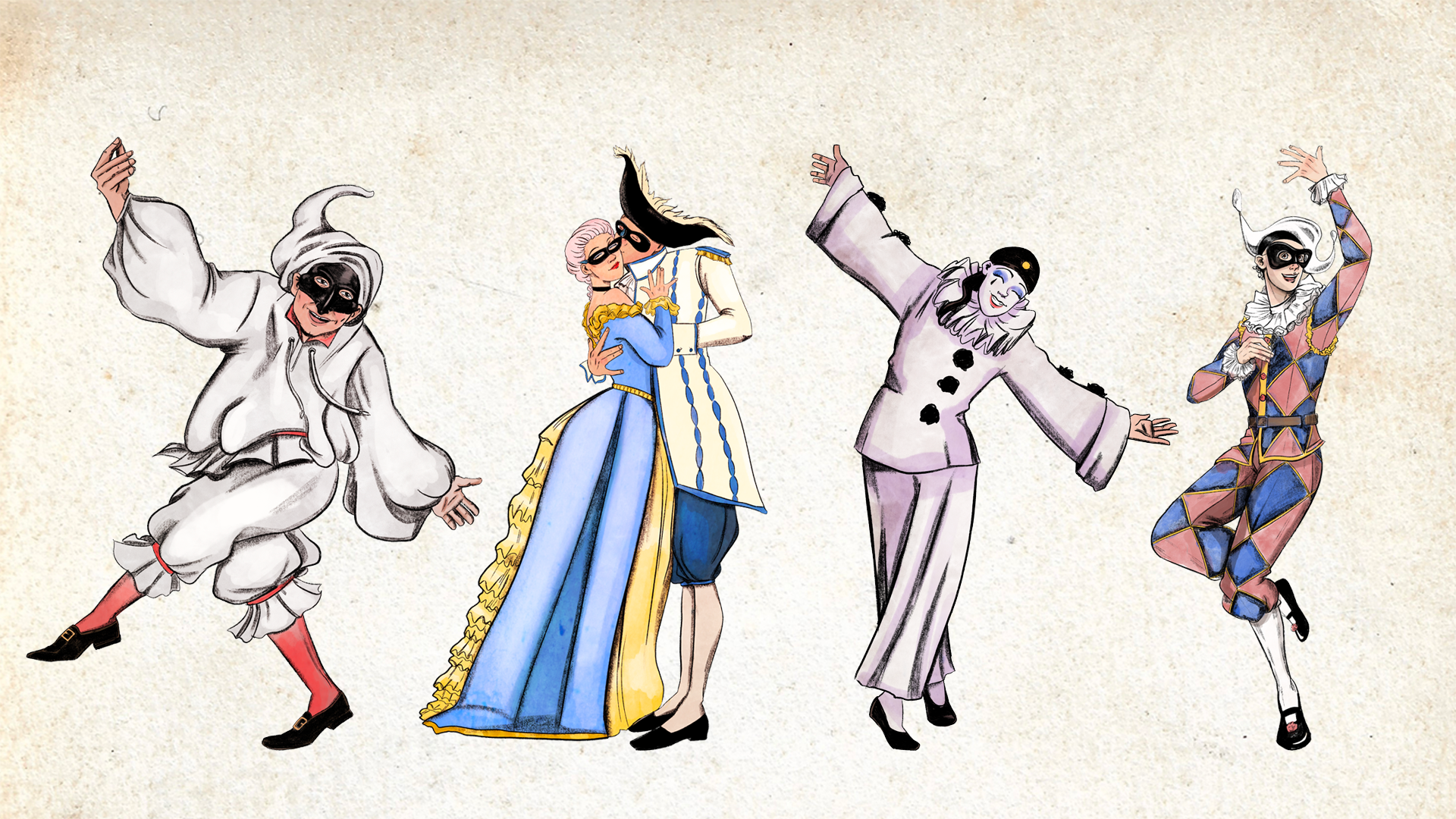
At the heart of Commedia was its vibrant cast of archetypal characters. Figures such as Arlecchino (Harlequin), Pulcinella, Pantalone, Il Dottore, and Colombina represented recognizable social types—miserly old men, crafty servants, pompous intellectuals, and clever young lovers. These characters were deeply physical, with distinctive movements, voices, and masks that made them instantly identifiable. Their exaggerated bodies and gestures communicated humor even across language barriers.
Improvisation was another defining feature of Commedia dell’Arte. Performers were trained not only in acrobatics, dance, and mime, but also in the art of spontaneous wit. Their “lazzi”—short comic routines or gags—became some of the most memorable parts of each show. This improvisational spirit encouraged actors to play off the audience, break the fourth wall, and respond to current events, giving performances a freshness that prefigured many later forms of popular entertainment.
When European immigrants came to the United States in the 18th and 19th centuries, they brought with them theatrical traditions influenced by Commedia. Traveling performers, circus clowns, and comedic lecturers borrowed the stock-character model and physical humor of Commedia, which blended naturally into America’s emerging entertainment scene. As stages expanded in cities and frontier towns, audiences favored quick, energetic, and humorous acts—the very hallmarks that Commedia had perfected.
American vaudeville, which rose to prominence in the late 19th and early 20th centuries, echoed Commedia dell’Arte’s variety-show spirit. Like Commedia troupes, vaudeville programs mixed music, slapstick, pantomime, and character-driven sketches. Many vaudeville comedians adopted exaggerated personas reminiscent of Commedia’s archetypes: the bumbling fool, the scheming trickster, the pompous elite. Even vaudeville’s emphasis on punchy, rehearsed-but-flexible routines closely resembled the “lazzi” passed down through centuries.
Physical comedy in vaudeville also owed much to Commedia. The pratfalls, chases, tumbles, and broad gestures of vaudeville clowns and comedians derived from the athleticism of Commedia performers. Stars like Buster Keaton, Charlie Chaplin, and the Marx Brothers—though working in film—carried vaudevillian traditions shaped by earlier Commedia-influenced stage practices. Their on-screen personas echo Arlecchino’s agility, Pulcinella’s mischief, and Pantalone’s blustering indignation.
The influence of Commedia also extended into American burlesque, though in a different way. Early burlesque, before becoming associated primarily with striptease, was a satirical theatrical form that parodied high culture, melodrama, and social pretension. This irreverent mocking of authority and exploitation of exaggerated types reflected Commedia’s comic inversion of societal norms. Even the bawdy humor and flirtatious female characters in burlesque can be traced back to Colombina and other unmasked, witty servant women in Commedia tradition.
Ultimately, Commedia dell’Arte shaped American popular entertainment by providing a template for character-driven comedy, physical humor, and improvisational performance. Its legacy can be seen in vaudeville’s variety structure, burlesque’s satirical edge, and the enduring use of stock comedic characters across stage and screen. Though separated by centuries and continents, these theatrical forms share a lively, irreverent spirit that continues to influence performers and audiences today.