Historic New Orleans Burlesque & Live Entertainment
The Original Nite Cap

Speakeasy vibes, with links to the past
Live Music, Burlesque & Cocktails in the 7th Ward
A New Orleans Original
The Original Nite Cap hales from a long history that started in the 1960’s and was spearheaded by the legenday Big Chief Alfred Doucette. He and his brother’s set out on a mission to have one of the best night clubs in New Orleans. Originally residing Uptown on Louisiana Ave., The Nite Cap closed in the 80’s. Fast forward to 2018, the current building owners of 1300 St. Bernard Ave. were in the process of renovated the building and found the original signage for The Original Nite Cap.
It started the revival of the brand. After a beautiful renovation was complete, Covid-19 hit New Orleans. The entirety of nightlife and entertainment was uncertain and The OGNC sat vacant. Fast forward to the Summer of 2024, Bella Blue, Andrew Principe, and JD Solomon were on a mission to open something exciting and unique that would showcase community, entertainment, live music, delicious cocktails, food options, and more.
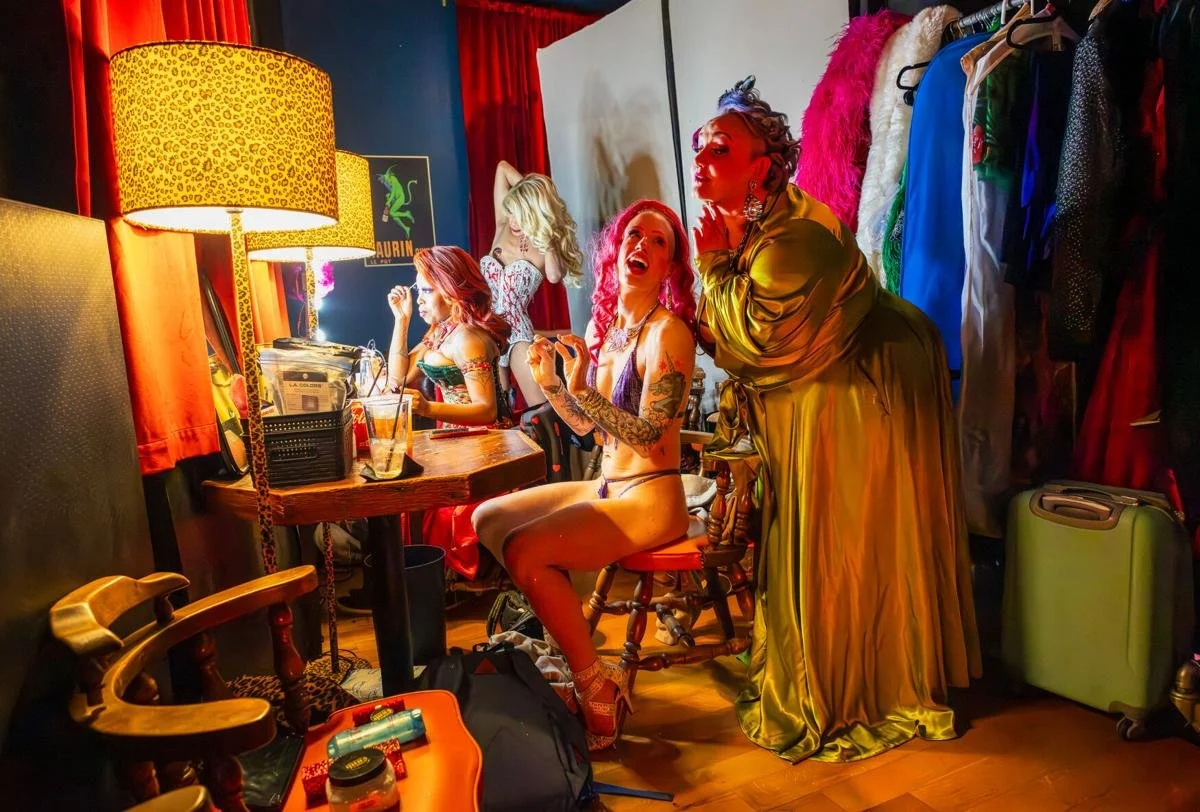
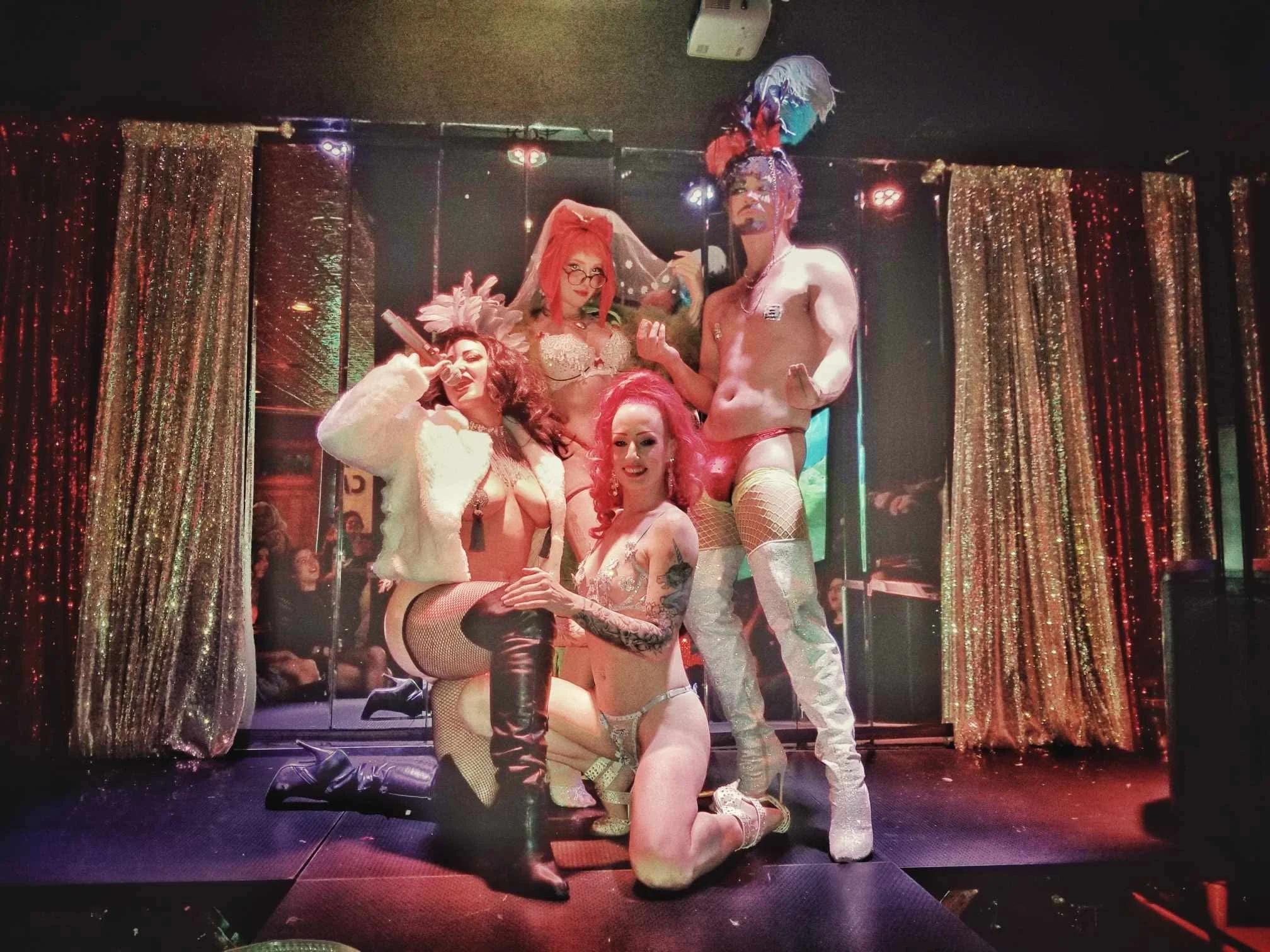
Under the direction of Bella Blue, The OGNC is proud to have become a neighborhood staple as well as 7th Ward showbar. We want to be seen as the best New Orleans speakeasy, which is why nearly every night of the week features a variety of entertainment options. Or, it can be just a chill place to meet with friends and have a cocktail. We hope that you’ll come visit soon and see what we are all about!


New Orleans Best Speakeasy

Dinner & a Show
A Throwback to the Days of New Orleans Past


SPEAKEASY NEW ORLEANS
burlesque new orleans
new orleans burlesque shows
burlesque show nola
Burlesque on Bourbon Street reached its heyday roughly from the 1920s through the early 1960s, when New Orleans’ French Quarter functioned as one of America’s most permissive—and theatrical—entertainment districts. Long before neon daiquiri shops and cover bands dominated the strip, Bourbon Street was a dense corridor of nightclubs, cabarets, and theaters where jazz, comedy, striptease, and variety acts blended into a distinctly New Orleans form of nightlife.
The audience was as eclectic as the acts. You had traveling businessmen in town for conventions, riverboat crews with cash in their pockets, local politicians and power brokers who wanted to see and be seen, and tourists chasing the city’s reputation for vice and spectacle. Just as importantly, locals—service industry workers, musicians, and neighborhood regulars—were part of the scene. The Quarter was not yet the tourist monoculture it would later become; it was a living neighborhood, and Bourbon Street’s clubs reflected that mix. Women attended as well, especially in the later years, when burlesque leaned more toward glamorous revue than strictly risqué performance. Couples on dates, groups celebrating, and curious first-timers all filtered through the same doors.
The venues themselves ranged from small, smoky rooms to more elaborate theaters with stages, orchestras, and full production numbers. Clubs like the 500 Club and other Bourbon Street houses featured comedians, emcees, jazz bands, and dancers in a continuous flow of entertainment. Burlesque here wasn’t just striptease—it was a structured show. A typical night might include a comic monologue, a musical interlude, and then a featured dancer whose act balanced tease, choreography, and personality. The line between nightclub, theater, and bar was intentionally blurred.
Food was very much part of the ecosystem, though it wasn’t always the star of the show. Many Bourbon Street burlesque clubs operated on a cabaret model, meaning patrons were expected to order drinks and often light food while watching performances. Menus tended toward what could be served quickly and eaten without interrupting the show: sandwiches, oysters, shrimp cocktails, and simple Creole dishes. In some venues, especially earlier in the century, you could get a proper meal—steak, seafood, or classic New Orleans fare—before the show intensified later in the evening. The experience was less about fine dining and more about sustaining a long night out, where food, alcohol, and entertainment were intertwined.
Outside the clubs, the street itself provided another layer of culinary support. Late-night eateries, po’boy shops, and oyster bars kept the crowds fed between shows or after closing time. It wasn’t unusual for someone to catch a set, step out for oysters or a sandwich, and then move on to another club. Bourbon Street functioned as a continuous loop of consumption and spectacle, with food acting as both fuel and social glue.
By the 1950s, the aesthetic of Bourbon Street burlesque had shifted toward a more polished, almost cinematic style—feathered costumes, choreographed ensembles, and marquee headliners. At the same time, increasing regulation, changing social norms, and competition from other forms of entertainment began to erode the scene. By the early 1960s, the classic era of burlesque on Bourbon Street was fading, replaced gradually by a different kind of nightlife.
What remains from that heyday is the template: a street where performance, indulgence, and hospitality coexist, and where a night out is never just one thing. It’s a drink, a bite, a show, and a story—all unfolding in sequence, just as it did when burlesque ruled Bourbon Street.
Happy to be.your Speakeasy New Orleans