Commedia dell’Arte
PIERROT
The Lovesick Fool
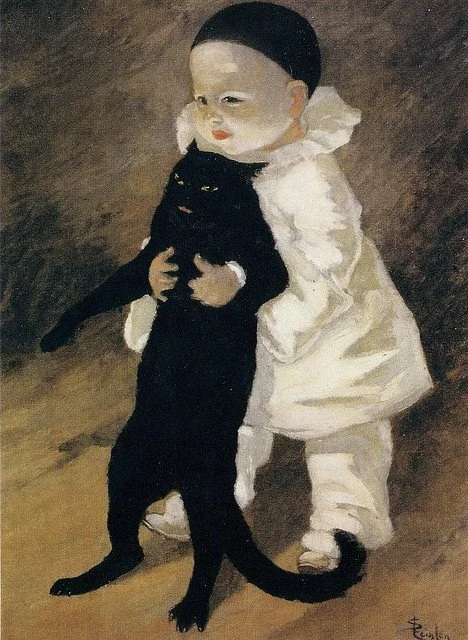
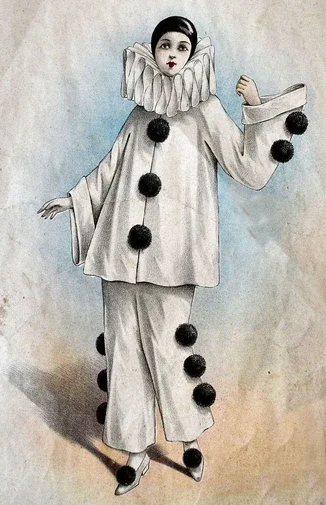
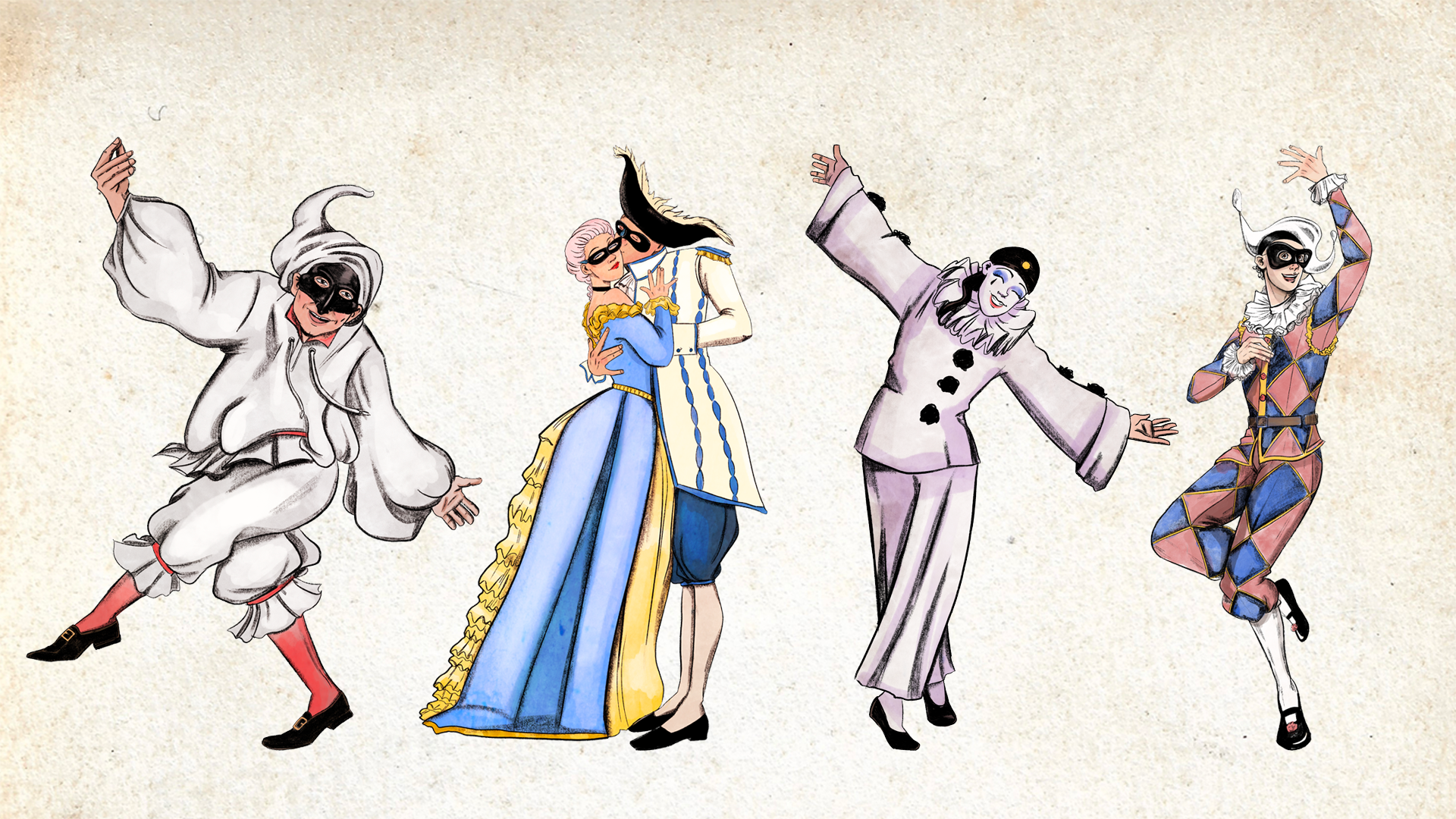
Pierrot, originally known in Italy as Pedrolino, is one of the most iconic figures to emerge from Commedia dell’Arte. Unlike the mischievous zanni such as Arlecchino and Pulcinella, Pierrot is characterized by his gentle, naïve, and often melancholy disposition. He typically wears loose white clothing with oversized buttons and a soft, unmasked face powdered white, emphasizing his innocence. Pierrot’s quiet tenderness sets him apart from the more boisterous Commedia characters, establishing him as a figure of poetic vulnerability.
In early Commedia performances, Pierrot served as a loyal, if bumbling, servant. He often found himself the victim of tricks, misunderstandings, or unrequited love, especially in scenarios involving the elegant Columbina. His simplicity and earnestness made him an emotional counterweight within the ensemble; while other characters schemed or argued, Pierrot offered sincerity and softness. Over time, especially in French adaptations, he evolved from a comic servant into a romantic, introspective dreamer.

Pierrot’s performance style also diverged from traditional zanni physicality. While still capable of slapstick, he relied more on gentle mime, expressive gestures, and delicate timing. His stillness and silence emphasized interior emotion rather than explosive chaos, paving the way for later pantomime traditions. Modern interpretations—such as those by the 19th-century mime Jean-Gaspard Deburau—solidified Pierrot as the sad clown archetype, a symbol of longing and misunderstood innocence.
The relationship between Pierrot and Pulcinella is rooted in their shared origins as zanni but shaped by contrasting personalities. Pulcinella is sharp, earthy, hungry, and unpredictable—simultaneously a trickster and a victim of circumstance. Pierrot, by contrast, is soft, obedient, and often lost in his own emotional world. When the two appear together in Commedia scenarios, Pulcinella’s cynical wit frequently clashes with Pierrot’s trusting nature. Pulcinella may mock or outmaneuver him, not out of cruelty, but because Pulcinella embodies survival instincts that Pierrot lacks.
Their dynamic highlights the full spectrum of the zanni class: from the shrewd survivor (Pulcinella) to the gentle innocent (Pierrot). In performances, this contrast provides both comic tension and thematic richness, showing how different personalities navigate the same hardships. While Pulcinella uses cunning to endure, Pierrot relies on hope and loyalty—traits that may leave him wounded but also make him deeply human. Together, they reflect the dual heart of Commedia dell’Arte: the laughter born from both resilience and vulnerability.